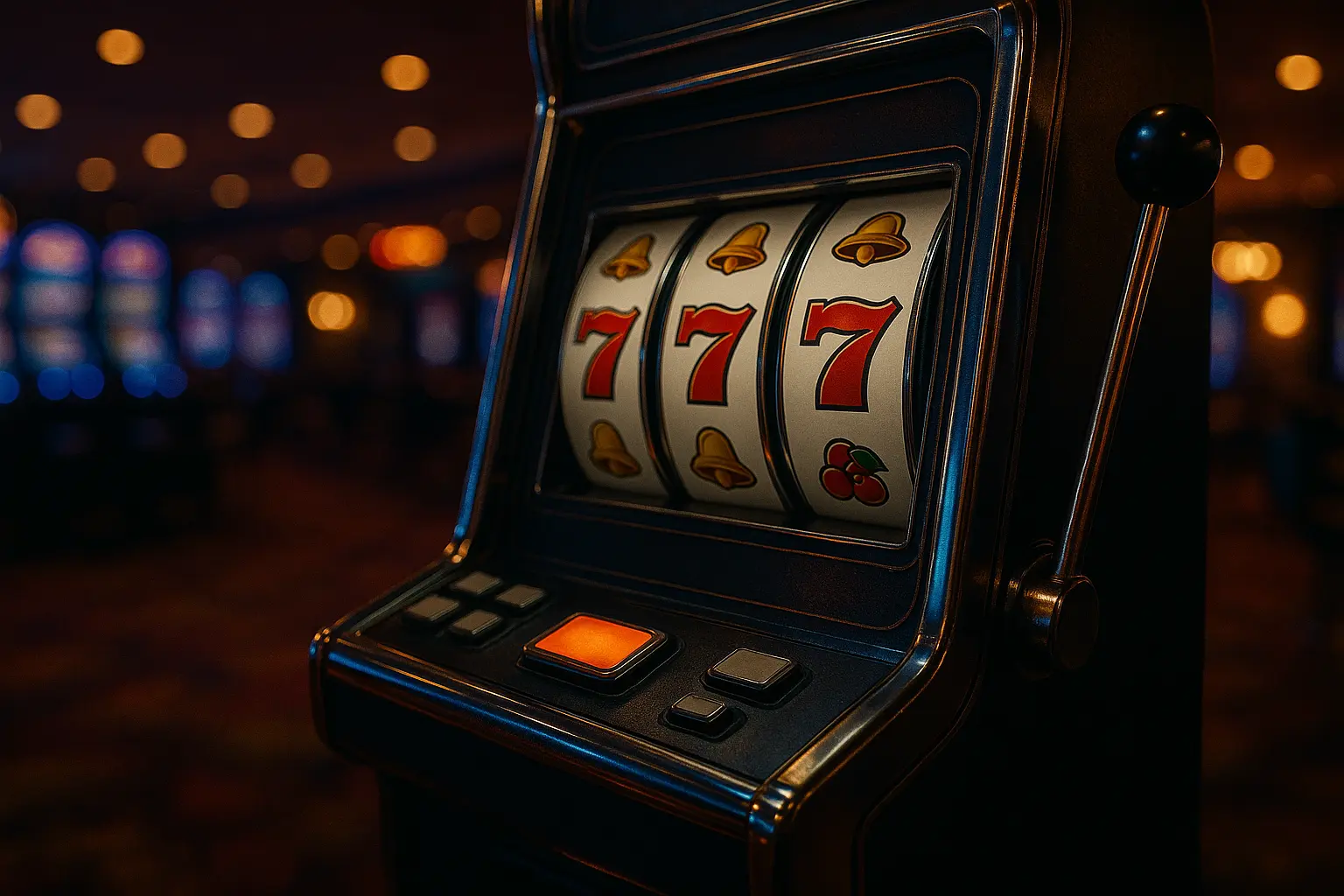

The Psychology of the Streak: Why We Believe in Hot and Cold Slots
Humans are naturally wired to find patterns, even in completely random sequences. In the fast-paced, flashing environment of a casino, this pattern-seeking behavior often manifests as a belief in winning and losing streaks.
Deconstructing the Hot and Cold Slots Myth
The human brain inherently dislikes unpredictability. When we observe a slot machine paying out three times in twenty minutes, our cognitive bias immediately labels it "hot." Conversely, if a machine consumes our bankroll without triggered bonuses or notable payouts, we brand it "cold." This classic psychological phenomenon is known as the Gambler's Fallacy—the mistaken belief that past events can influence the probability of future, completely independent occurrences.
This psychological trap is the exact foundation of the hot and cold slots myth. In reality, modern slot games do not possess a memory. They do not know how long it has been since their last major jackpot, nor do they track how much money a player has fed into their coin acceptor. Every spin is an entirely independent event, meaning any perceived pattern of consecutive wins or losses is simply a trick of our minds grasping for order in chaos.
The Science Behind the Spin: How Slots Actually Work
To truly understand why slot streaks are an illusion, we have to look under the hood at the technology that governs every spin. Whether you are playing a physical cabinet on a casino floor or a digital game, the underlying mechanics remain identical.
Demystifying RNGs: Why the Slot Machine Streaks Myth Fails
Every legitimate slot machine relies on a microcomputer called a Random Number Generator (RNG). The RNG generates thousands of mathematical values per second, 24 hours a day, even when nobody is playing the game. The exact millisecond you press the spin button, the RNG selects the corresponding number value to determine the visual outcome on the reels. Because these numbers are generated randomly and with complete independence, the outcome of your current spin has absolutely zero statistical connection to the spin before it or the spin after it. This is why the slot machine streaks myth is mathematically impossible.
But what about playing in digital spaces? Many virtual casino players frequently ask: are online slots hot or cold? The answer remains a resounding no. Online slots use highly audited, certified RNG software regulated by government gaming authorities to guarantee fairness. An online slot cannot become "due" for a payout, nor can it enter a manual "cold spell" designed to stop players from winning. The perception of a streak is simply a natural statistical cluster within a massive sequence of random trials—much like flipping a coin and getting heads five times in a row.
Strategic Slot Selection: Focus on Metrics, Not Superstitions
Since chasing "hot" games is a mathematical dead end, smart players put aside superstition and look at concrete, verifiable data to guide their gaming choices and manage their bankrolls.
Understanding RTP and Volatility
Instead of relying on luck or looking for physical cues, you should evaluate slot machines using two primary metrics: Return to Player (RTP) percentage and volatility.
- Return to Player (RTP): This is the theoretical percentage of wagered money a slot will pay back to players over millions of spins. For example, a slot with a 96% RTP is mathematically designed to return $96 for every $100 wagered over its entire lifespan. Always look for games with an RTP of 96% or higher.
- Volatility (Variance): This describes how often and how much a slot pays out. High volatility slots offer large but infrequent jackpots, resulting in long dry spells that players often mistake for a "cold" machine. Low volatility slots offer smaller, frequent wins, which make the game feel "hot" but result in lower overall maximum payouts.
By matching your bankroll to a game's volatility rather than relying on mystical streaks, you can enjoy a much safer and highly optimized gaming session.
Key Takeaways
- • Slot machines do not have memory; every single spin is an independent event with completely randomized outcomes.
- • The belief in hot and cold streaks stems from the Gambler's Fallacy and the human brain's natural desire to find patterns in randomness.
- • Modern slots, both online and offline, are governed by audited Random Number Generators (RNGs) that cannot be programmed to run "due" for a win.
- • Online casinos displaying "hot" or "cold" lists use them as historical visuals of recent payouts, not as indicators of future winning probabilities.
- • Relying on verifiable metrics like Return to Player (RTP) and Volatility is the only logical way to choose slot games and manage your risk.
Deep Dive
Why Do Casinos Promote "Hot" and "Cold" Slot Trackers?
If hot and cold streaks are mathematically false, you might wonder why many online casinos prominently feature "Hot & Cold" trackers in their lobbies. The explanation lies entirely in player engagement and marketing psychology.
Casinos understand that the hot and cold slots myth is deeply ingrained in gambling culture. By displaying these metrics, they appeal to both sides of the cognitive spectrum: players who want to jump on a "hot" winning trend, and players who want to target a "cold" machine in the belief that it is about to burst with cash. This is a brilliant marketing strategy that drives traffic to specific games but has absolutely zero bearing on your statistical chances of winning. The data shown in these trackers is purely historical—it tells you what happened over the past few hours, but it cannot influence the randomized algorithms of your next spin.
FAQ
Can a physical casino manually change a slot machine's payout settings on the fly?
No. In licensed and regulated jurisdictions, changing a slot machine's payout percentage (RTP) is a highly complex and heavily monitored process. It requires opening the machine to replace physical chips, or in modern server-based systems, a secure, audited software update that cannot be performed while a player is active or initiated on a whim to stop a winning streak.
Why do some slots seem to pay out immediately while others take hundreds of spins?
This is entirely due to the game's volatility. High-volatility slots are built to have fewer winning combinations but larger payouts, creating long periods without wins. Low-volatility slots are calibrated to pay out small amounts frequently. Neither scenario is caused by the machine being "hot" or "cold"; it is simply the game performing exactly as its mathematical model intended.
Does using a casino rewards card or changing your bet size affect the RNG?
No. The RNG operates independently of your player rewards card, bet size, or the time of day. Inserting a rewards card simply tracks your wagering volume for loyalty points; it has no mathematical input or influence on the game's mathematical algorithm.
Deep Dive
Formulating a Smart Slot Play Strategy
Since you cannot control or predict a slot's payout cycles, the best way to approach slot play is through strict bankroll management. Start by setting a firm loss limit before you play and stick to it. Avoid the urge to chase losses when a game feels "cold," and don't overextend your budget when a game feels "hot." Treat slots purely as a form of paid entertainment. If you want to maximize your playtime, choose games with an RTP of 96% or higher and low-to-medium volatility, which will provide more consistent, smaller wins to keep your balance active.
Conclusion
Ultimately, the concept of hot and cold slot machines is a giant myth. While it adds a layer of mystery and excitement to the casino floor, relying on it to guide your betting decisions is a fast track to losing your bankroll. By understanding that every spin is controlled by an unbiased, memoryless RNG, you can shed these superstitions. Play responsibly, focus on high RTP percentages, match volatility to your budget, and remember that the next spin is always a brand-new roll of the dice.