
The Digital Brain: Demystifying the Random Number Generator (RNG)
Every single spin on a modern slot machine is governed by an invisible, tireless engine known as the Random Number Generator. To truly understand slot mechanics, we must first dispel the myths surrounding "hot" and "cold" streaks.
How the RNG Dictates Slot Machine Payouts
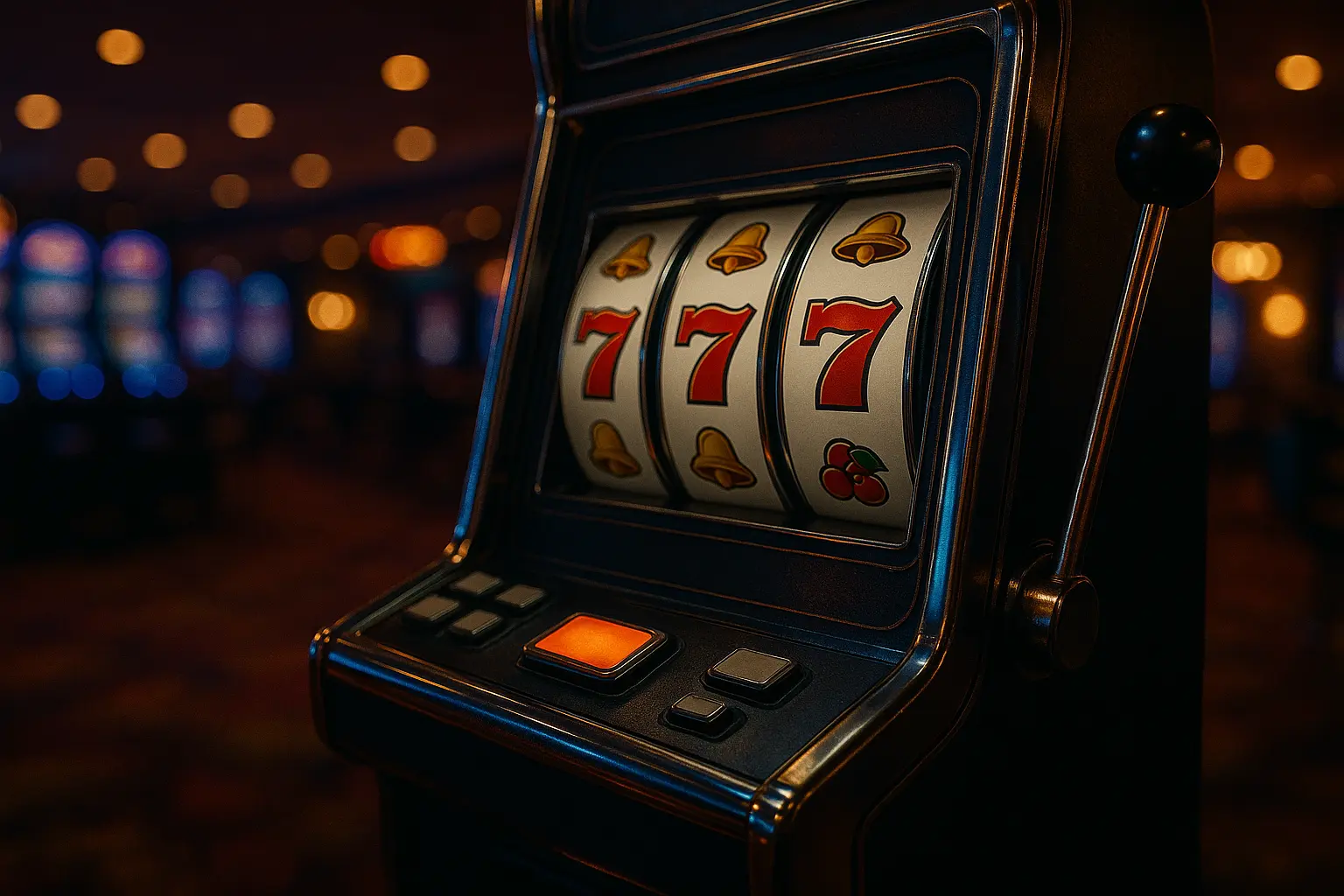
At the core of all modern slot machine payouts is a software algorithm called a Pseudo-Random Number Generator (PRNG). This microchip or software code continuously generates thousands of mathematical values per second, even when nobody is playing the game. The exact millisecond you press the "Spin" button, the engine locks in the most recent sequence of numbers. These numbers are then instantly mapped to specific symbols on the virtual reels. Whether you hit a massive jackpot or a completely blank spin was decided the precise fraction of a second you clicked the button. The physical spinning of the reels is merely a visual presentation designed to build excitement; the software already knows the final result before the reels even begin to move. Crucially, the system has no memory. It does not know if you just won the jackpot or if you have lost ten spins in a row. Each spin is a completely independent event.
The Math of Returns: RTP and Volatility
While every individual spin is entirely random, the long-term behavior of a slot game is highly predictable. This predictability is built into the game's core math model using two key metrics.
Having Return to Player (RTP) Explained and Decoded
To understand how slot games payout over time, you need to have RTP explained simply. Return to Player (RTP) is the theoretical percentage of all wagered money that a slot machine will pay back to players over a massive sample size of spins (often millions of rounds). For example, if a game has a 96% RTP, it means that, theoretically, for every $100 wagered, the game will return $96 to the player pool over its lifetime, while the casino keeps $4 as its profit (the house edge). However, you must pair RTP with slot volatility to get the full picture. Volatility (or variance) describes how that money is distributed.
- High Volatility: These games pay out less frequently, but when they do, the wins tend to be much larger. It is a high-risk, high-reward model.
- Low Volatility: These games offer frequent, smaller payouts, allowing you to stretch your bankroll and enjoy longer, less erratic play sessions.
Evaluating Your Options: How to Read the Numbers
With thousands of virtual slot games available at your fingertips, choosing the right game is about matching a slot's mathematical blueprint to your personal goals and risk tolerance.
Balancing Risk and Reward in Slot Game Returns
When browsing game catalogs, looking at the advertised slot game returns is your first line of defense. High-quality casinos and software providers publish these statistics transparently in the game information menus. If your goal is to maximize your entertainment time with a modest budget, your best strategy is to look for games boasting an RTP of 96% or higher coupled with low-to-medium volatility. This combination ensures your balance doesn't deplete too quickly. Conversely, if you are chasing a life-changing payout and are comfortable losing your session budget quickly in pursuit of it, a highly volatile progressive jackpot slot is designed for your style. Understanding these metrics empowers you to make conscious decisions rather than playing blindly.
Key Takeaways
- • Modern slots use a Random Number Generator (RNG) that creates entirely independent outcomes on every spin, meaning past results never influence future spins.
- • RTP represents the long-term theoretical percentage a game pays back to players, with 96% or higher generally considered a fair industry standard.
- • Volatility dictates the payout structure, defining whether a slot awards small, frequent wins or rare, massive jackpots.
- • The visual spin of the reels is a theatrical display; the computer algorithm determines the final output the exact millisecond you press spin.
- • Adjusting your bet size relative to a slot's volatility level is the most effective way to manage your bankroll and extend your play.
Deep Dive
Behind the Paytable: Understanding Hit Frequency and Weighting
To dive deeper into the mechanics of slot payouts, we must look at "hit frequency" and "reel weighting." Hit frequency is a metric that tells you how often a winning combination will land on a payline. A slot might have a high hit frequency of 30%, meaning roughly one in three spins will result in some form of payout. However, many of these payouts might be "loss-disguised-as-wins"—where you bet $1.00 but only win back $0.20. Furthermore, game developers use reel weighting to make high-paying symbols appear less frequently on the virtual reels than low-paying symbols (like cherries or playing card values). Even if a reel looks like it has an equal number of symbols, the virtual mapping in the RNG software assigns far fewer mathematical stops to the jackpot symbols. This is why you will frequently see two jackpot symbols land perfectly, only for the third reel to tease you by landing just off-target.
FAQ
Are slot machines programmed to pay out at certain times of day?
No. This is a common myth. Because slot machines operate on continuous Random Number Generators, time of day, day of the week, or the time elapsed since the last jackpot have absolutely zero impact on payouts. A jackpot can theoretically be hit on two consecutive spins.
Can a casino change a slot game's RTP on the fly?
No, casinos cannot change a slot's RTP with a simple switch. Game math is hardcoded by the software developers and certified by independent testing laboratories (like eCOGRA or iTech Labs). While some games are shipped with selectable RTP ranges, a casino must completely reload or update the game client under strict regulatory oversight to change it, and this cannot be done during active play.
Does betting maximum coins increase your chances of winning?
Betting the maximum amount does not increase your chances of landing a winning combination, as the RNG operates independently of your bet size. However, on some classic slots and progressive jackpot games, betting max bet is required to unlock specific bonus rounds or qualify for the top jackpot tier. Always check the game's paytable rules before playing.
Deep Dive
The Psychology of Slot Design: Why They Feel So Rewarding
Game developers spend millions of dollars perfecting the sensory feedback of slot games. Features like "near misses" (where a jackpot symbol stops just above or below the payline) are mathematically calibrated to stimulate the brain's reward pathways, keeping players engaged. Combined with celebratory audio cues and bright animations—even on losing spins—it is easy to lose track of time and budget. Recognizing these psychological hooks is essential for maintaining control and keeping your casino sessions fun and safe.
Conclusion
Ultimately, slot machines are beautifully complex entertainment devices built on strict mathematical principles. They are designed to guarantee a profit for the casino in the long run, while offering players the thrilling possibility of short-term wins through pure randomness. By understanding the roles of the RNG, checking the RTP, and picking a volatility level that matches your budget, you can play with clarity, manage your expectations, and make your bankroll go much further. Remember to play responsibly, set strict limits, and view slots as a form of entertainment rather than a way to make money.