The Birth of the Reel: How the First Slot Machine Was Created
To truly appreciate where modern slots come from, we must look back to the late 19th century. During the 1890s, industrialization was booming, and inventors in the United States were experimenting with various automated novelty machines, music boxes, and coin-operated devices.
Charles Fey and the Legendary Liberty Bell
While a New York-based company named Sittman and Pitt created a popular five-drum poker-based machine in 1891, it had a major flaw: it could not pay out cash prizes automatically because of the sheer number of possible winning combinations in a poker hand. Players who hit a winning hand usually had to collect their prizes—often a free beer, cigar, or drink—at the bar hosting the machine.
The true breakthrough occurred between 1887 and 1895 in San Francisco, California. A brilliant Bavarian-born mechanic named Charles Fey designed the first slot machine capable of automatic cash payouts: the Liberty Bell. Fey recognized that to automate payouts, he needed to simplify the math. He replaced the fifty card faces of the Sittman and Pitt machine with three spinning reels containing just five symbols: horseshoes, diamonds, spades, hearts, and a cracked Liberty Bell.
By reducing the variables, Fey’s mechanical system could easily identify a winning combination. If a player pulled the side lever and aligned three Liberty Bell symbols on a single line, the machine instantly clinked open its internal cash hopper and paid out ten nickels. The Liberty Bell was a massive hit, laying the fundamental groundwork for all mechanical reel slots that would follow over the next seventy years.
The Evolution of Slots: From Mechanical Gears to Electromechanical Wonders
As the popularity of Fey's invention grew, so did scrutiny from local governments and anti-gambling leagues. This political pressure did not stop the games; instead, it sparked a wave of creative adaptations that forever changed the visual language of slot machines.
The Electromechanical Revolution of Bally's Money Honey
In the early 1900s, cash gambling machines were banned in several US states. To bypass these laws, manufacturers like the Mills Novelty Company introduced "chewing gum dispensers." Instead of paying out coins, these machines rewarded players with fruit-flavored chewing gum matching the symbols on the reels. This is exactly where the famous cherry, lemon, plum, and orange symbols came from. Even the legendary "BAR" symbol originated as the logo of the Bell-Gum Fruit Company. This period of early adaptation showed that the history of slots was closely tied to legal and cultural shifts.
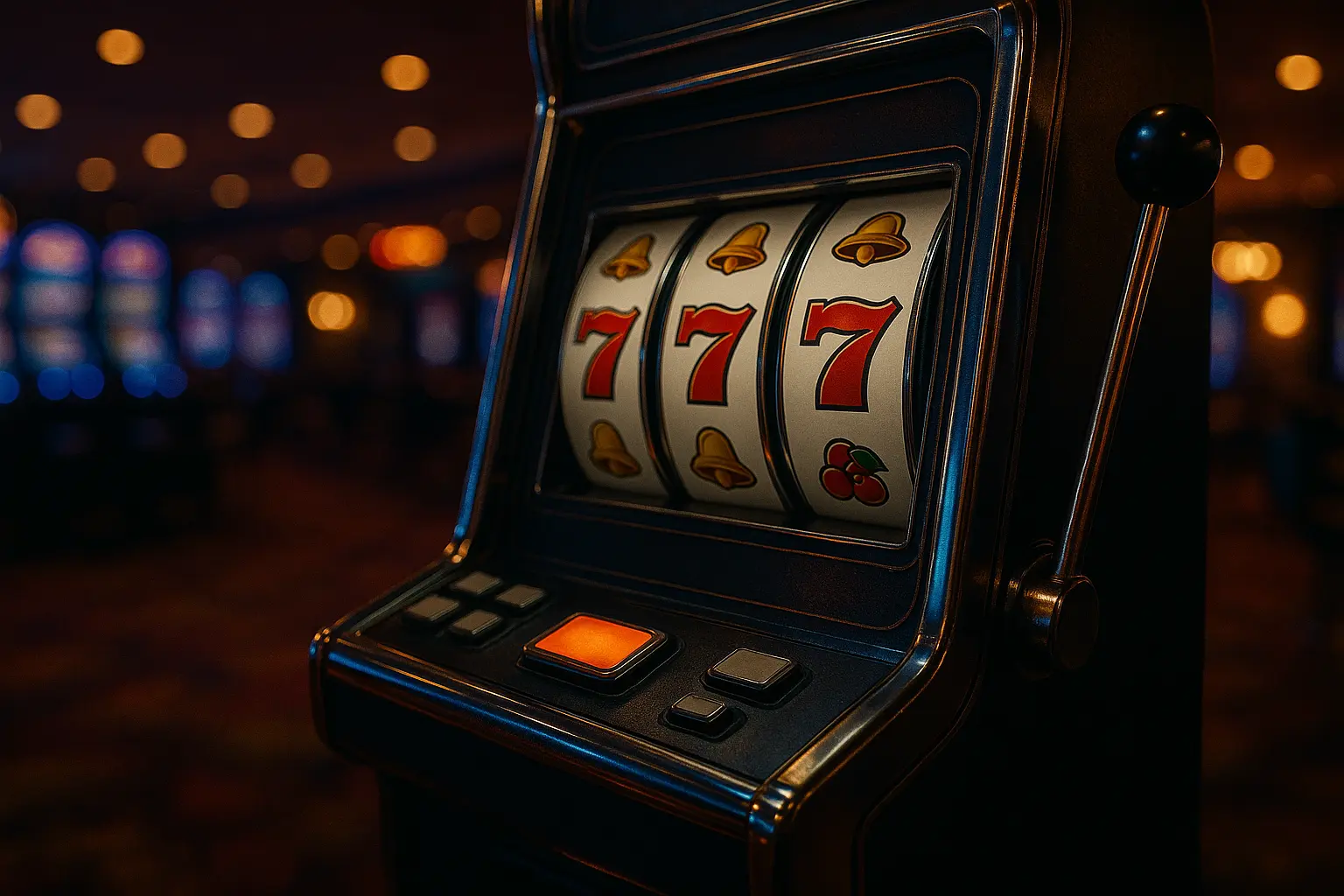
The next major milestone in slot evolution arrived in 1963, when the gaming manufacturer Bally released Money Honey, the world's first electromechanical slot machine. Before Money Honey, slots relied entirely on springs and tension levers to spin the reels. Bally introduced electrical components that allowed for more complex internal math, multi-coin betting, and a revolutionary "bottomless hopper." This hopper could automatically dispense up to 500 coins without needing a manual attendant. The classic mechanical pull-lever was still kept to make players feel comfortable, but the inner workings were now powered by electricity, paving the way for the high-capacity casino floors of Las Vegas.
The Digital Shift: Video Slots and the Rise of the Microchip
By the mid-1970s, the physical components that had defined slots for nearly a century were about to vanish. The arrival of microchips and video displays changed the casino floor forever.
Fortune Coin and the Introduction of Random Number Generators
In 1976, a company called Fortune Coin Co. developed the very first video slot machine. Instead of physical reels spinning behind a glass window, this machine used a modified 19-inch Sony color screen to display virtual reels. Initially, players were highly skeptical. Without seeing physical metal parts spinning, many assumed the computer program was rigged to make them lose.
To build trust and ensure fair play, manufacturers introduced the Random Number Generator (RNG). The RNG is a microchip that constantly generates thousands of mathematical sequences per second, even when no one is playing. The moment a player presses the spin button, the RNG selects the exact number sequence of that microsecond, determining the symbols displayed on the screen. This technology proved to be incredibly secure and fair. It eliminated mechanical wear-and-tear and allowed developers to build complex bonus rounds, multi-way paylines, and massive progressive jackpots that were mechanically impossible on older machines.
Key Takeaways
- • Charles Fey invented the Liberty Bell in San Francisco between 1887 and 1895, creating the first mechanical slot machine with an automatic cash payout mechanism.
- • Famous slot symbols like cherries, lemons, and the BAR sign were created to bypass anti-gambling laws by turning slot machines into fruit-flavored chewing gum dispensers.
- • Bally’s Money Honey, released in 1963, was the first electromechanical slot machine, replacing pure mechanical springs with electric hoppers and multi-coin features.
- • The video slot, introduced in 1976 by Fortune Coin, replaced physical gears with digital displays, paving the way for video graphics and complex game mechanics.
- • Modern slot safety and fairness rely on Random Number Generators (RNGs), which ensure every single spin is mathematically random and completely independent of past results.
Deep Dive
Understanding the Modern Online Slot: From Hardware to HTML5
Today's slot games have moved far beyond land-based casinos. The modern era of slot gaming began in the mid-1990s with the launch of the first online casinos. Since then, the software powering these games has undergone a massive transformation. Early online slots were built using Adobe Flash, which was resource-heavy and incompatible with mobile devices. Today, developers use HTML5 technology, ensuring that games run smoothly, instantly, and with stunning high-definition graphics across desktops, smartphones, and tablets.
What makes modern online slots so fascinating is how they combine the math of Charles Fey's original reels with advanced gaming psychology. Instead of just one payline, players can now enjoy Megaways slots offering over 117,649 ways to win, cascading reels, interactive bonus games, and high-quality cinematic intros. Despite these high-tech features, the core principle remains the same: a player initiates a turn, a random algorithm determines the outcome, and wins are paid out instantly based on a pre-defined paytable.
FAQ
Was the Liberty Bell really the first slot machine ever made?
Yes, the Liberty Bell is widely recognized as the first true slot machine because it was the first to feature a three-reel design with an automatic payout system. While Sittman and Pitt created a drum-based poker machine earlier in 1891, it lacked an automatic payout system because there were too many winning card combinations to trigger a mechanical release.
Why did early slot machines dispense chewing gum instead of money?
During the early 1900s, strict anti-gambling laws in various US states banned cash-paying slot machines. To keep their businesses running, manufacturers converted the machines to distribute chewing gum. The fruit symbols on the reels (cherries, plums, lemons) represented the flavor of the gum the player would win if those symbols lined up.
Are modern online slot machines truly random and fair?
Yes. Reputable online slots use a highly regulated technology called a Random Number Generator (RNG). The RNG is a software algorithm that generates thousands of random mathematical outcomes every second. Independent auditing bodies regularly test these algorithms to guarantee that every single spin is completely random, fair, and uninfluenced by previous spins.
Deep Dive
Choosing Your Era: Classic 3-Reel Slots vs. Modern Video Slots
If you enjoy spinning the reels today, you have a vast world of choices. Many online casinos let you filter games by their design style. Understanding the history of slots can help you find the gameplay experience that fits you best:
- Classic 3-Reel Slots: These games pay tribute to the original mechanical designs of Charles Fey and early electromechanical models. They usually feature simple gameplay, clean retro graphics, three reels, and minimal bonus features. They are perfect for players who prefer straightforward, fast-paced action without complex distractions.
- Modern Video Slots: These games feature five or more reels, immersive storylines, and a variety of special features like free spins, interactive mini-games, and wild multipliers. If you enjoy deep themes, movie tie-ins, and complex bonus mechanics, video slots are your best bet.
When deciding which game to play, always check the Return to Player (RTP) percentage and the game's volatility. Volatility tells you how often a slot pays out and how large those wins are likely to be. Classic slots often have high volatility, paying out larger amounts less frequently, while video slots offer a wide mix of low, medium, and high volatility options.
Conclusion
From the clanking metal wheels of Charles Fey's 1895 Liberty Bell to the ultra-smooth, mobile-optimized HTML5 slots of today, the history of slots is a story of incredible innovation. What began as a simple mechanical pastime in San Francisco taverns has grown into a highly sophisticated global digital entertainment industry. The next time you spin your favorite online slot, take a moment to look at the reels. Whether you are aiming for a massive progressive jackpot or just enjoying a casual spin, you are participating in a rich, century-old tradition of mechanical and digital ingenuity. Always play responsibly, understand the math behind the games, and enjoy being a part of this amazing, ongoing evolution of slots.